As an Amazon Associate, we earn from qualifying purchases. Some links on this site are affiliate links at no extra cost to you. Our recommendations are based on thorough research and editorial judgment.


How to Reduce VOC Exposure During Painting (Practical Steps)

Ever start a painting project and realize you might be surrounded by harmful fumes? It happens to the best of us! To keep those high levels of VOCs (volatile organic compounds) at bay, there are some straightforward steps you can take.
First, opt for low-VOC or even zero-VOC paints. Trust me, these options can seriously cut down on the harmful stuff being released into your home. They might even come in vibrant colors, so you won’t be sacrificing looks for safety.
Next, think about ventilation. Open those windows wide and let that fresh air in! It’s a good idea to keep them open for at least 48 to 72 hours after you finish painting. If there’s a breeze outside, maybe even put a fan toward the window to draw out the stale air and pull in the fresh.
Now, let’s talk about safety gear. You’ll want to wear an N95 mask to filter out those nasty particles. Gloves and safety goggles are also a must to protect your skin and eyes. Honestly, it’s always better to be safe than sorry, right?
If you want to go the extra mile, consider using hepa air purifiers with a CADR of at least 300. These can catch the leftover VOC particles that linger around even after you’ve painted. With cleaner air, you’ll feel so much better just being in your space.
Oh, and if you’re sanding, try wet sanding instead of dry. It helps keep the dust down significantly during your project.
In conclusion, taking these steps can lead to a much healthier indoor environment after painting. Doesn’t that sound good? What will you try first in your next painting project?
Key Takeaways
- Select low-VOC or zero-VOC paints to minimize harmful emissions during and after painting.
- Ensure proper ventilation by opening windows and using fans for at least 48 to 72 hours post-painting.
- Use protective gear, such as N95 masks and goggles, especially in low-ventilation areas.
- Incorporate HEPA air purifiers in freshly painted rooms to trap lingering VOC particles effectively.
- Practice wet sanding techniques to reduce dust and airborne particles for a cleaner painting environment.
What Are VOCs and Why Reduce Exposure?

Have you ever noticed a headache creeping in after a long painting session? It could be those pesky Volatile Organic Compounds, or VOCs, lurking in the air. These chemicals are super common in everyday products like paints, thinners, and coatings, and they can easily evaporate into the atmosphere at room temperature.
Prolonged exposure to VOCs isn’t just an inconvenience. It can lead to some serious health issues, including dizziness, respiratory problems, and in more extreme cases, even liver damage or cancer. So, why does this matter? Because taking steps to reduce your exposure can lead to a healthier home environment.
Try these practical tips for cutting down on VOC emissions:
- Opt for low-VOC or zero-VOC products whenever you can.
- Make sure to ventilate the area well while painting—open those windows!
- Limit your time in spaces that just got a fresh coat of paint.
Honestly, it doesn’t take much to make a difference. Just a few simple changes can help protect you from the harmful effects of these chemicals. Remember, your health is worth it. Additionally, choosing products with safe chemical compositions that comply with regulatory standards can further minimize health risks.
Why Choose Low-VOC or Zero-VOC Paints?

When you think about how to minimize your exposure to harmful chemicals, low-VOC or zero-VOC paints should definitely be on your radar. The impact they can have on your home and health might surprise you.
Now, let’s break this down. Low-VOC paints contain less than 50 grams of VOCs per liter, while zero-VOC paints have even less—fewer than 5 grams. That means you’re looking at significantly lower harmful emissions when you choose these options, both during and after the painting process.
What’s really important? The health benefits. These paints can help lower the chances of experiencing respiratory problems, headaches, or other health issues linked to VOCs. So, not only are you making your space look good, but you’re also caring for your well-being.
Think about indoor air quality as well. Those nasty fumes from regular paints can stick around for weeks and make it hard to breathe. Choosing low-VOC or zero-VOC options helps keep your air fresher, which is a big win for your home.
Here’s another thing to consider: performance. Many low-VOC paints hold up just as well as traditional paints, so you don’t have to sacrifice style for safety. The best part is, you can refresh your living space while feeling good about the choices you’re making.
Regulatory bodies like Green Seal are on board with promoting these better-for-you options, which means more people are starting to take notice. So, why does this matter? Because the more we demand these alternatives, the more they could become the norm.
Additionally, choosing paints with strong adhesion helps ensure a durable, long-lasting finish that resists moisture and wear.
Health Effects of VOCs
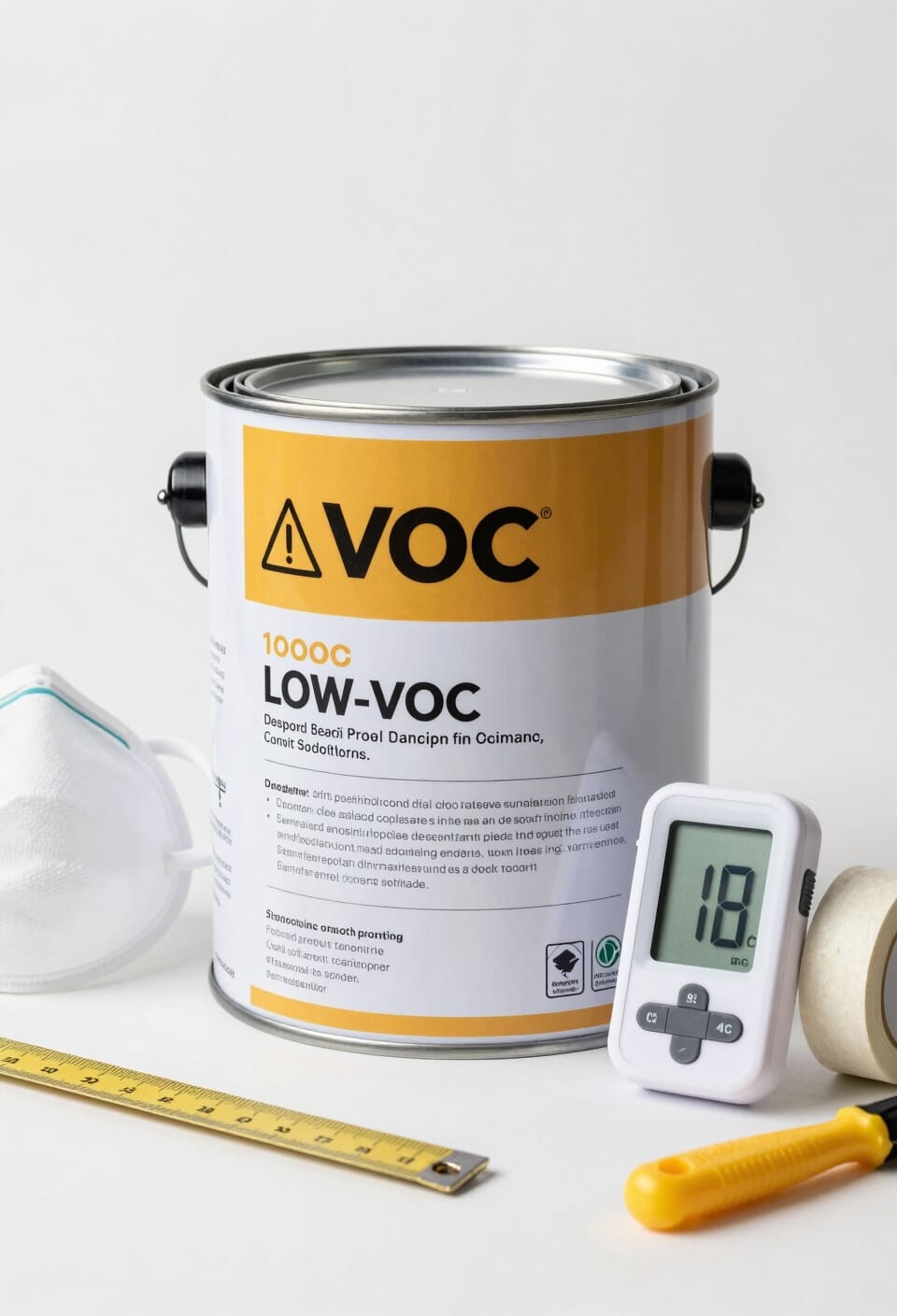
Have you ever walked into a freshly painted room and instantly felt a little lightheaded? You’re not alone. Many people don’t realize that the fumes they’re breathing in could be volatile organic compounds, or VOCs. Prolonged exposure to these chemicals can lead to headaches, dizziness, and even respiratory irritation. Yikes, right? Some VOCs, like formaldehyde and benzene, are even more concerning because they’re linked to serious health problems, including liver damage and cancer.
It’s essential to recognize that certain groups are more vulnerable. Children and pregnant women can be particularly at risk because their bodies are still developing. So, why does this matter? Studies have shown that just being around low levels of VOCs over time can lead to significant health issues.
Don’t overlook the role VOCs play in indoor air quality. They can contribute to chronic respiratory diseases and make allergies flare up more than usual. The U.S. Environmental Protection Agency (EPA) has even labeled VOCs as one of the top offenders when it comes to indoor air pollutants. This isn’t just about cleaner air; it’s about protecting your health, too.
Try this: if you’re redecorating or using new products around the house, be mindful of what you choose. Look for low-VOC or even zero-VOC paints, cleaners, and furnishings. These alternatives can tackle the job without putting your health at risk. Similarly, choosing biodegradable formulations in cleaning products can help reduce environmental toxins that impact indoor and outdoor air quality.
Why Proper Ventilation Is Essential for Safe Painting?
Why Proper Ventilation Is Essential for Safe Painting?
Ever tackled a painting project and felt a headache creeping in? You’re not alone! Proper ventilation is key to avoiding those unwanted side effects. Here’s the scoop on why it really matters:
- Dilution of VOC emissions: Paint can release volatile organic compounds (VOCs) that aren’t great for your health. Good ventilation helps mix that stuff up with fresh air, reducing its concentration.
- Air quality improvement: Make it a habit to open windows and turn on exhaust fans. This simple step promotes better air circulation in your space, and it makes a noticeable difference.
- Timeframes: After you’ve painted, stick with ventilation for at least 48 to 72 hours. It may seem like a hassle, but those extra hours really cut down on off-gassing risks.
Why would you want to keep windows closed? It actually traps those VOCs inside, letting them linger for days if not weeks.
– Protecting health: When you’re living in shared spaces, taking care of air quality is even more important. Effective ventilation strategies can help keep everyone in the household safe.
Using protective gear like painters’ aprons can also reduce skin exposure to harmful paint chemicals, further enhancing overall safety during painting projects.
Truth is, ensuring proper ventilation is crucial for making your painting project as safe and healthy as possible. Have you thought about how you’re managing air flow during your next DIY endeavor?
Easy Ventilation Tips for Better Airflow
Creating good airflow during a painting project is more crucial than most people realize. Without proper ventilation, those pesky paint fumes can linger longer than you’d like. So, how can you ensure fresh air flows through your space while you work? Let me share a few simple tips.
First off, opening windows and doors is a straightforward way to boost ventilation. It’s amazing how much difference it makes to let that fresh air in. Try to create a cross-breeze by opening windows on opposite sides of the room.
But don’t stop there. Using fans can really enhance your ventilation efforts. Position box fans or exhaust fans to blow air out. This can help push out those volatile organic compounds (VOCs) and bring in cleaner air. Just think about it: the more air you move, the fresher your environment.
After you finish painting, it’s a good idea to keep the area ventilated for at least 48 to 72 hours. Honestly, this gives harmful VOCs plenty of time to dissipate. You might be thinking, “Is that really necessary?” The answer is yes—your lungs will thank you.
Timing can make a big difference too. If you can, schedule your painting projects during the spring or fall. These seasons usually offer better weather for natural ventilation, making it easier to keep things airy and breathable.
And here’s something you might not have considered—air purifiers can be your best friend post-painting. Using HEPA air purifiers can help trap VOC particles that tend to linger even after the paint dries.
For an even more controlled environment, consider using portable paint booths equipped with efficient air filtration systems designed to minimize VOC exposure.
These straightforward strategies can really improve your painting experience. So, the next time you’re gearing up to tackle a project, think about how you can boost your airflow. What are some of your go-to ventilation tips?
Best Practices for Using Air Purifiers to Reduce VOCs
Are you tired of that lingering paint smell after a DIY project? If you’ve recently painted a room, you’re probably dealing with not just the smell, but also volatile organic compounds (VOCs) that can hang around for days. The good news is that air purifiers can be a smart choice to tackle this issue. Here are some helpful tips for using them effectively.
Select the Right Air Purifier: Focus on air purifiers that come with HEPA filters and activated carbon. These are the most effective at capturing those pesky VOC particles. Look for ones that have a Clean Air Delivery Rate (CADR) of at least 300 to ensure they can handle the job.
Next up is positioning. You’ve probably heard that placement matters, and it’s true. Try putting the air purifier right where you’re painting or in the room that was recently painted. This is especially crucial during the first 48 to 72 hours after painting when VOCs tend to be at their highest levels.
Regular filter maintenance is key. If you want your air purifier to keep doing its job, make sure to change the filters as recommended by the manufacturer. Ignoring this step can lead to decreased performance and leave you stuck with unwanted VOCs.
Ever think about going for an air purifier with smart features? These gadgets can monitor indoor air quality and adjust themselves based on the VOC levels detected. It’s like having a little air-quality assistant on hand.
Additionally, maintaining proper skin safety practices is important when handling cleaning products or sprays around painted areas to avoid irritation or adverse reactions.
Best Painting Techniques to Minimize VOC Emissions
Are you tired of dealing with the smelly aftermath of painting, not to mention the potential health risks from VOCs? You’re not alone. The good news is, you can minimize those harmful emissions without turning your project into a science experiment. Here are some go-to techniques that make a real difference.
First up, consider swapping out your usual paint for water-based options. These paints often have low or even zero VOC content, meaning they put fewer harmful organic compounds into the air. It’s a simple change, but it can significantly cut down on emissions while still giving you a great finish.
Next, have you thought about using HVLP systems? High Volume Low Pressure systems are a fantastic investment. They cut down on overspray and waste by improving transfer efficiency, which directly contributes to lowering VOC levels during your paint job. You get better control and less mess—what’s not to love?
Another trick? Focus on precision flow control. Maintaining the right solvent ratios while you paint can keep waste and emissions in check. It’s about being mindful and making sure you’re applying just what you need.
Don’t overlook surface preparation either. A well-prepped surface not only ensures better adhesion but also extends the life of your paint job. That means fewer coats down the line and less frequent repaints—great news for both your wallet and the environment!
Timing the job is smart as well. If you can, pick a time of year when ventilation is naturally better, like during spring or fall. This helps air circulation, which helps VOCs dissipate more quickly. So, why does this matter? Well, your indoor air quality and the overall comfort of your space depends on it.
Additionally, choosing low-VOC sealants in your painting and renovation projects can further minimize harmful emissions and improve indoor air quality.
Using Protective Gear to Manage VOC Exposure
While you’re getting into painting, have you ever thought about how those fumes could affect you? Protecting yourself from harmful VOCs is more important than you might realize. The right gear can really make a difference in keeping you safe. Consider these basics:
- Masks: Grab an N95 or P100 filter. They’re good at cutting down on those nasty VOCs and other fumes floating around.
- Gloves: Go for chemical-resistant gloves, like nitrile or neoprene. They’ll guard your skin against toxic stuff.
- Safety Goggles: Keep your eyes safe from splashes and irritating vapors. Trust me, you don’t want to deal with that kind of discomfort.
- Full-Face Respirators: These bad boys are serious. They filter air and harmful vapors thoroughly, especially useful in areas that don’t get much airflow.
How often do you check if your protective gear fits properly? Keeping an eye on the condition of your gear is essential. If it doesn’t fit right, it won’t do its job to reduce VOC exposure. Choosing a respirator with NIOSH certification ensures tested and reliable protection against airborne hazards.
Strategies for Maintaining Indoor Air Quality by Reducing VOCs
Are you gearing up for a painting project? It’s a fun way to refresh your space, but it can come with some challenges, particularly when it comes to air quality. VOCs, or volatile organic compounds, can be a concern during and after painting. Here are some straightforward tips to help you keep the air in your home as fresh as possible while you work.
Start with ventilation. Simply opening your windows and doors can create a natural flow of air that helps carry those pesky VOCs outside. Aim for cross-ventilation by letting fresh air circulate for at least 48 to 72 hours after you finish painting. You’ll be surprised at how much this can help!
Another great option is to invest in an air purifier. Look for a HEPA purifier equipped with activated carbon filters. They’re designed to capture VOCs and can significantly improve your air quality during and after the painting process.
Exhaust fans can also make a big difference. If you have a window-mounted exhaust fan, use it to effectively draw out air laden with VOCs. It’s an easy addition that can help clear the air quickly.
Don’t forget about indoor plants! Some varieties, like the Spider Plant and Peace Lily, are excellent at filtering VOCs naturally. Adding some greenery not only beautifies your space but also helps with air quality.
Additionally, choosing eco-friendly materials like sustainable drop cloths can minimize chemical exposure during your project.
Honestly, taking these steps can greatly enhance your indoor environment during your painting projects. Why not give one or two a try next time? Keeping your home comfortable and healthy is worth the effort!
Additional Resources for Safe Painting Practices
When it comes to diving into a painting project, feeling safe should be at the top of your to-do list. You’re probably wondering how to keep it healthy for you and your family while transforming your space. Here are some solid options to consider:
First off, check out the EPA Guidelines. Paints labeled as low-VOC have fewer than 50 grams of VOCs per liter. This is important because VOCs, or volatile organic compounds, can be harmful. Choosing low-VOC paints is a simple way to make your living environment healthier.
Don’t forget about Green Seal Certification. This certification identifies paints with specific VOC limits, which means you’re selecting products designed for safer indoor air quality. Who wants to worry about breathing in things that could make them sick?
Also, keep an eye out for Green Guard Gold Products. These are tested for low emissions. Having them around can seriously help improve indoor air quality and reduce those pesky VOC emissions, especially if you’re painting big areas.
Is it good practice to ensure proper ventilation? Yes! Open those windows and turn on the exhaust fans. Ideally, you want to let fresh air circulate in newly painted rooms for about 48 to 72 hours. It makes a noticeable difference and speeds up the drying process, too.
Frankly, one of my favorite tricks? Adding some air-purifying plants. Peace Lilies and Spider Plants are great at soaking up remaining VOCs from the air. Plus, they make your space feel more inviting.
Using wet sanding techniques on painted surfaces can also minimize dust and airborne particles, contributing to a healthier environment throughout the project.
Frequently Asked Questions
How to Reduce VOC From Paint?
To reduce VOC from paint, we should seek safe, low-VOC options and select eco-friendly finishes. By using proper application techniques, we minimize emissions and protect our space from harmful fumes during our painting projects.
How to Reduce Exposure to VOCS?
To reduce our exposure to VOCs, we can choose paint alternatives, store products safely, and identify VOC sources in our environment. Let’s prioritize ventilation and employ air-purifying plants for a healthier living space.
How to Ventilate a Room While Painting?
To ventilate a room while painting, we should employ effective ventilation techniques, open windows for ideal placement, and use fans to enhance air circulation. This way, we’ll guarantee a healthier environment during our project.
What Are the Rules for VOC in Paint?
VOC regulations overview varies by state, impacting paint types. Let’s compare options, like low-VOC and zero-VOC products. When painting, we should always prioritize safety by choosing compliant paints and ensuring proper ventilation for our environment.


